A Generational Investment in the Saint John Region
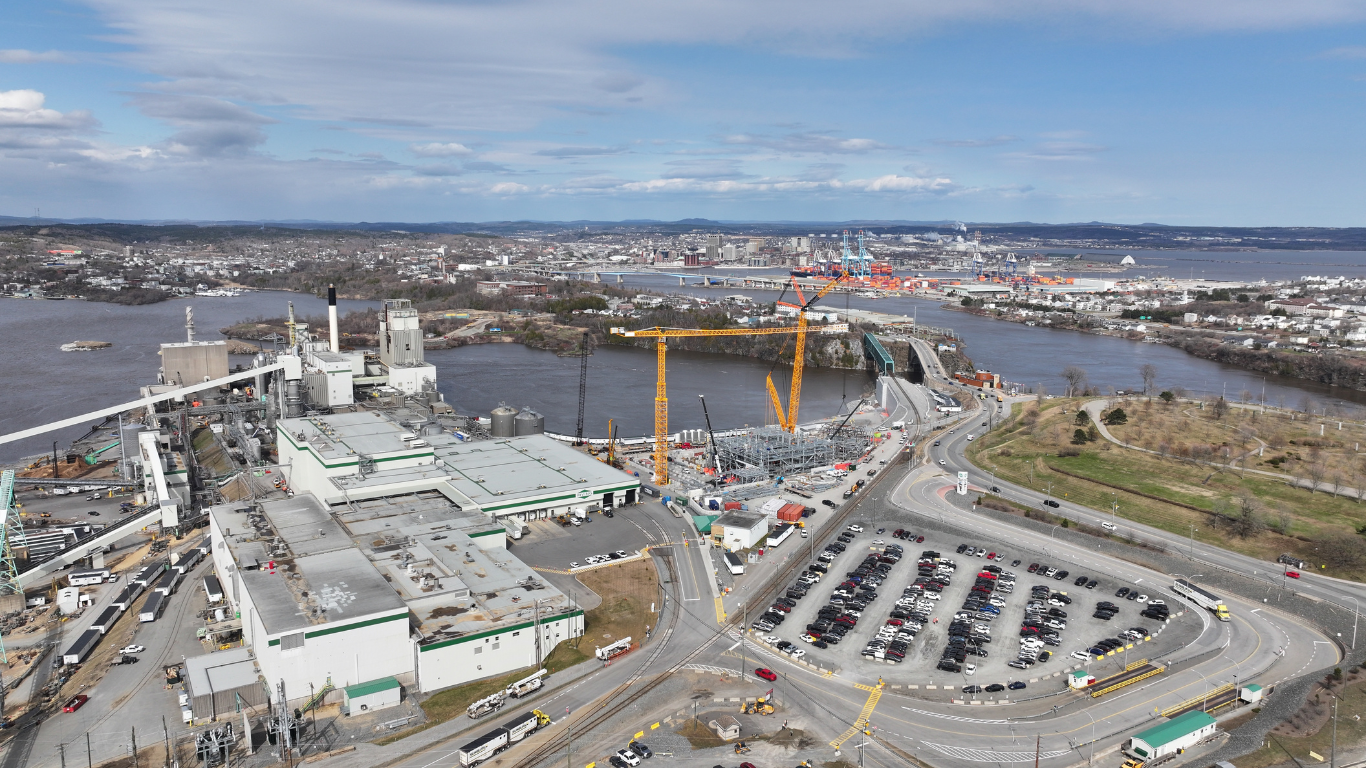
Bright and yellow on the horizon, it’s hard to miss them: two tall cranes rising above the west Saint John skyline.
For locals across the region, cranes have long been viewed as a beacon of development, signalling investments and growth in the local economy. Today in the Saint John Region, the two cranes at the westside gateway represent one of the most significant investments by far: Irving Pulp & Paper’s Project NextGen.
In fact, at $1.5 billion, the generational modernization of Saint John’s pulp mill is the largest investment in Canada’s forest products industry in over 30 years.
First announced in 2024, Project NextGen broke ground in 2025 with construction expected to continue until 2028. Each concrete pour, pipe laid, and steel component erected is a step toward the completion of a mill transformation that will put the Saint John Region on the map in forest products production.
More than anything, Project NextGen is a lodestar at a time of economic uncertainty, a vote of confidence that the Saint John Region is a good place for businesses to invest and grow.
It is setting up not just Irving Pulp & Paper for success, but the broader region with it, for generations to come.
A Commitment to the Future
Ten years ago, Irving Pulp & Paper, once among the top global producers, placed among the bottom quartile worldwide in the production of kraft pulp.
At a time when many pulp and paper mills were shuttering, Irving Pulp & Paper bucked trends with a consequential decision to rally and reinvest in the mill. Now at the final stage of a series of upgrades over the last decade, Project NextGen will see the pulp mill become one of the top kraft pulp producers in the world and a leader in environmental performance, competing on the global stage right from west Saint John.
Project NextGen will also position the mill and the region to remain a world-class player in the forest products industry for the next 40 years.
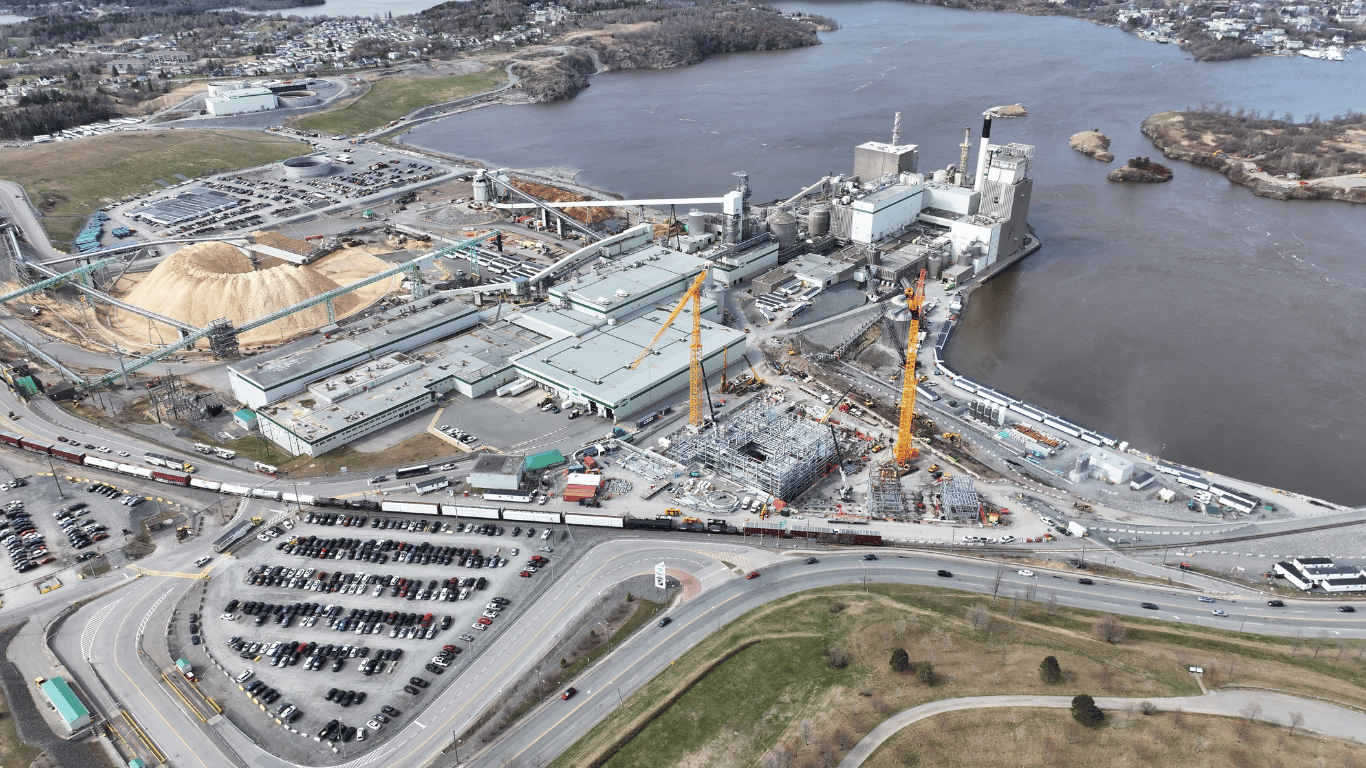 Photo provided by J.D. Irving, Limited.
Anchoring the project is the construction of a new recovery boiler that will increase the mill’s production by 66 per cent. A new turbine and generator will produce up to 140 megawatts of green energy — enough to power the whole mill with more besides to help decarbonize New Brunswick’s electrical grid.
The project will also result in reductions in both CO2 emissions and water consumption.
“These upgrades will ensure the pulp mill continues to be at the heart of the forest products supply chain and provides a regional market for chips, bark and pulpwood,” said Mark Mosher, Executive Vice President of Pulp and Paper with J.D. Irving, Limited.
When completed, Project NextGen will add 600 jobs across the forest supply chain.
A Commitment to the Region
During construction, now well underway, the mill’s workforce will more than double at peak periods, creating hundreds of opportunities for regional contractors and skilled tradespeople.
Saint John-based Lorneville Mechanical is one of these, and the company is playing a major role as the key mechanical contractor for the recovery boiler construction.
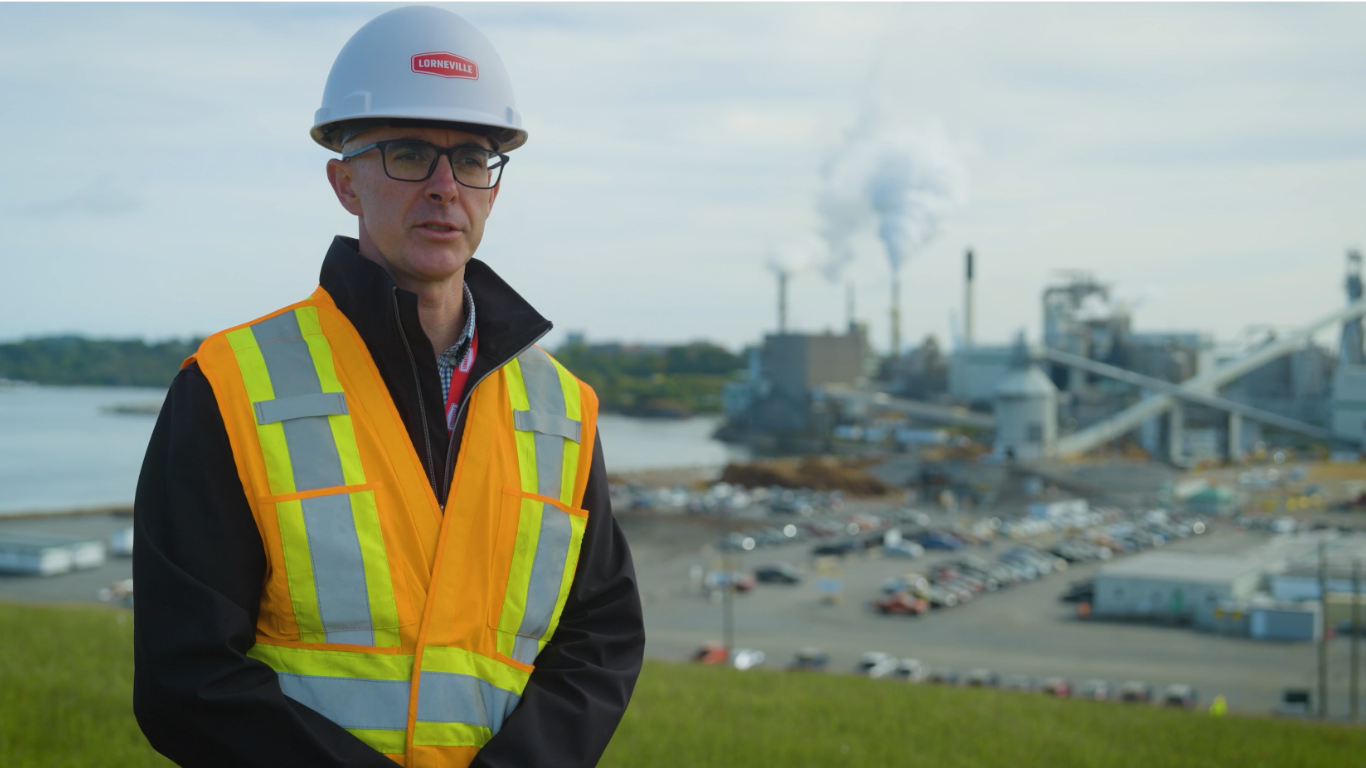 Photo provided by J.D. Irving, Limited.
“For contractors, long-term projects like NextGen provide workforce stability and the ability to plan and invest in people,” said Derek McGraw, Atlantic Regional Manager at Lorneville. “They create opportunities to develop key employees through hands-on experience, strengthen internal capability and build a skilled workforce that will support future industrial projects in the region.”
Over the course of construction, NextGen is expected to generate $539 million in employment income and 2,200 person years of employment. Estimated household spending generated by the project comes in at $409 million at local businesses.
With its multi-year construction period, Project NextGen is providing meaningful, long-term opportunities for tradespeople, helping to retain local talent while drawing in more from outside the region. Crucially, it places in-demand tradespeople in the region for future development projects once NextGen is complete.
For their part, Lorneville is in full-blown hiring mode to build the workforce necessary for the recovery boiler construction. This includes positions ranging from apprentices to supervisors and administrators to project managers.
“The structure to support this project will be significant,” McGraw said. “For Lorneville, these projects allow us to grow and train local talent, strengthen our regional presence and continue contributing to the industrial and economic future of the city of Saint John, as well as the province of New Brunswick.”
A Commitment to the Next Generation
At a time when the Saint John Region, and more broadly province-wide, is facing a shortage of skilled trades, NextGen offers a chance to alter this trajectory.
It’s doing so by building the region’s skilled trades talent pipeline. By providing sustained work, apprentices can gain the hours necessary to obtain their Red Seal certifications.
 Photo provided by J.D. Irving, Limited.
Mary Butler, President and CEO of New Brunswick Community College (NBCC) calls it a once-in-a-lifetime project, an opportunity for local tradespeople to mentor the next generation of talent.
“It really is about workforce capability and capacity building and something that will set New Brunswick up for success,” Butler said.
As NBCC ramps up its education and training to meet the workforce demands, there is a need for opportunities for learners to reach certification post-graduation.
“By equipping our graduates with the skills, technical competencies, expertise and hands-on learning through a project like NextGen, we're ensuring that the workforce of the future is ready to tackle any challenge that comes their way,” Butler said.
“That is going to create long-term resiliency for many years to come.”